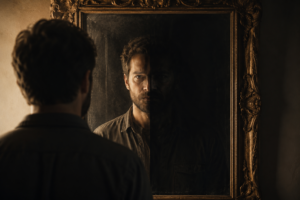
Most leaders worry about making mistakes.
Few worry about the mistakes they cannot see.
Yet those are often the most dangerous.
Because the greatest threat to a leader is rarely what they know.
It is what they do not know.
The Higher You Rise
Something interesting happens as people gain authority.
Feedback begins to change.
People become more careful.
More diplomatic.
More selective.
Some avoid disagreement.
Others avoid difficult conversations entirely.
The leader still receives information.
But the information becomes filtered.
Not because people are dishonest.
Because people are human.
Most people naturally avoid conflict.
Especially when power differences exist.
As a result, leaders often believe they are seeing the whole picture when they are only seeing part of it.
Success Can Create Distance
Success creates another challenge.
The more successful a person becomes, the easier it is to assume their perspective is accurate.
After all, past decisions produced positive outcomes.
Experience grows.
Confidence grows.
Influence grows.
Yet confidence can quietly become certainty.
And certainty can become blindness.
The danger is not confidence itself.
The danger is losing the curiosity that made growth possible in the first place.
What People Stop Saying
Every organization contains information that travels upward.
And information that does not.
Employees may hesitate to share concerns.
Team members may avoid difficult truths.
Friends may soften criticism.
Customers may leave without explaining why.
Over time, leaders can become surrounded by people who protect relationships by withholding honesty.
The leader feels supported.
But becomes less informed.
And support without truth is a dangerous combination.
The Mirror Problem
Most people can identify weaknesses in others.
Leadership requires identifying weaknesses in ourselves.
This is significantly harder.
We see our intentions.
Others experience our actions.
We know what we meant.
Others respond to what they felt.
The gap between intention and perception is where many blind spots live.
A leader may believe they are approachable.
The team may feel intimidated.
A leader may believe they are decisive.
Others may experience them as dismissive.
Both perspectives can exist simultaneously.
And that is what makes blind spots so difficult to detect.
Why Honest Feedback Matters
The strongest leaders are not those with the fewest weaknesses.
They are those who discover their weaknesses sooner.
This requires something many people find uncomfortable.
Feedback.
Not praise.
Not validation.
Not agreement.
Truth.
Particularly when the truth challenges how we see ourselves.
Growth often begins where comfort ends.
And leadership is no exception.
A Better Question
Many leaders ask:
“How can I become more effective?”
A more revealing question may be:
“What can others see that I cannot?”
That question changes everything.
Because it replaces certainty with curiosity.
And curiosity creates the possibility of growth.
A Final Reflection
Every leader has blind spots.
The issue is not whether they exist.
The issue is whether we are willing to look for them.
Because leadership is not the absence of weakness.
It is the willingness to confront weakness honestly.
The leaders who stop learning eventually stop seeing.
The leaders who continue learning continue discovering.
Not only about others.
But about themselves.
And that may be the most important leadership skill of all.